USDOT 3395422
MC-1105738
Licensed & Insured
Equipment Prep Guide
How to Prepare an Excavator for Transport
A few things done ahead of time make loading day faster and keep your machine safe on the road.
Loading day goes faster when the excavator is ready before the truck shows up. A few minutes of prep can save real time once the driver arrives.
This guide walks through what to check before transport. For the bigger picture on cost, permits, and weight rules, see our guides on what it costs to haul heavy equipment in Florida and Florida's weight limits.
Before the Truck Arrives
Check the Fuel Level
A lower fuel level is usually better for transport. It keeps the machine lighter and lowers the chance of a leak if the machine shifts even slightly during the haul.
Clear Off Loose Debris
Mud, rocks, and loose material caked on the tracks or undercarriage can shift or fall off during transport. Clearing the worst of it also helps the driver get a clear look at the undercarriage during the pre-load inspection.
Check for Leaks
A quick look underneath for hydraulic or fuel leaks before the truck arrives means fewer surprises once the machine is loaded and strapped down.
Positioning the Boom and Arm
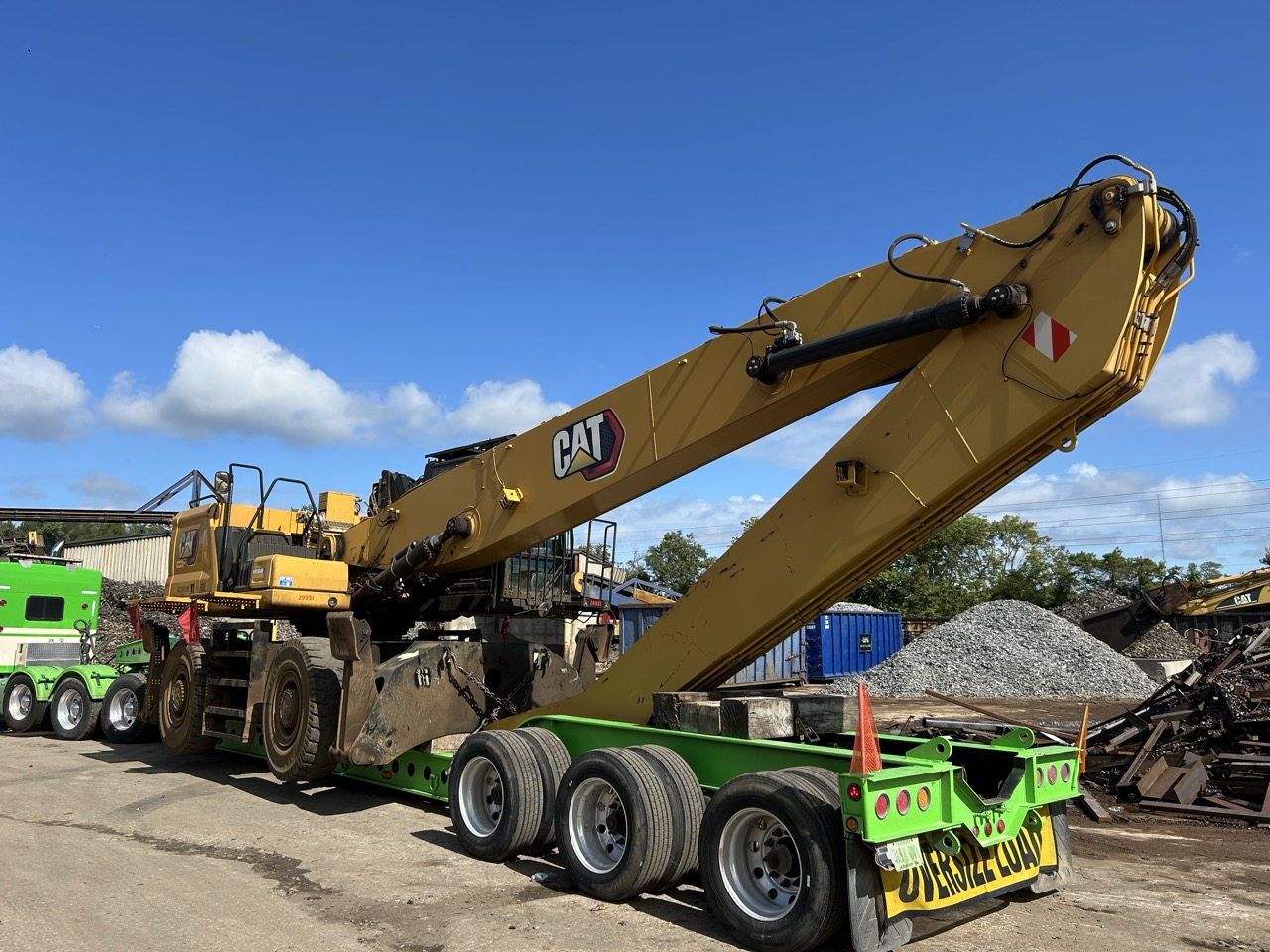
The boom and arm should be retracted and lowered as far as they safely go before loading. This keeps the machine's overall height down, which matters for both trailer clearance and whether the load needs a height permit at all.
The bucket should rest flat and low rather than curled up or extended out. A tucked-in bucket takes up less space and is far less likely to catch on anything during loading.
Track Position and Direction
Tracks should be straight and centered before the machine drives onto the trailer. A crooked approach makes loading slower and can put uneven pressure on the ramps or deck. The driver will usually guide this process, but starting straight makes it easier on everyone.
Securing the Load
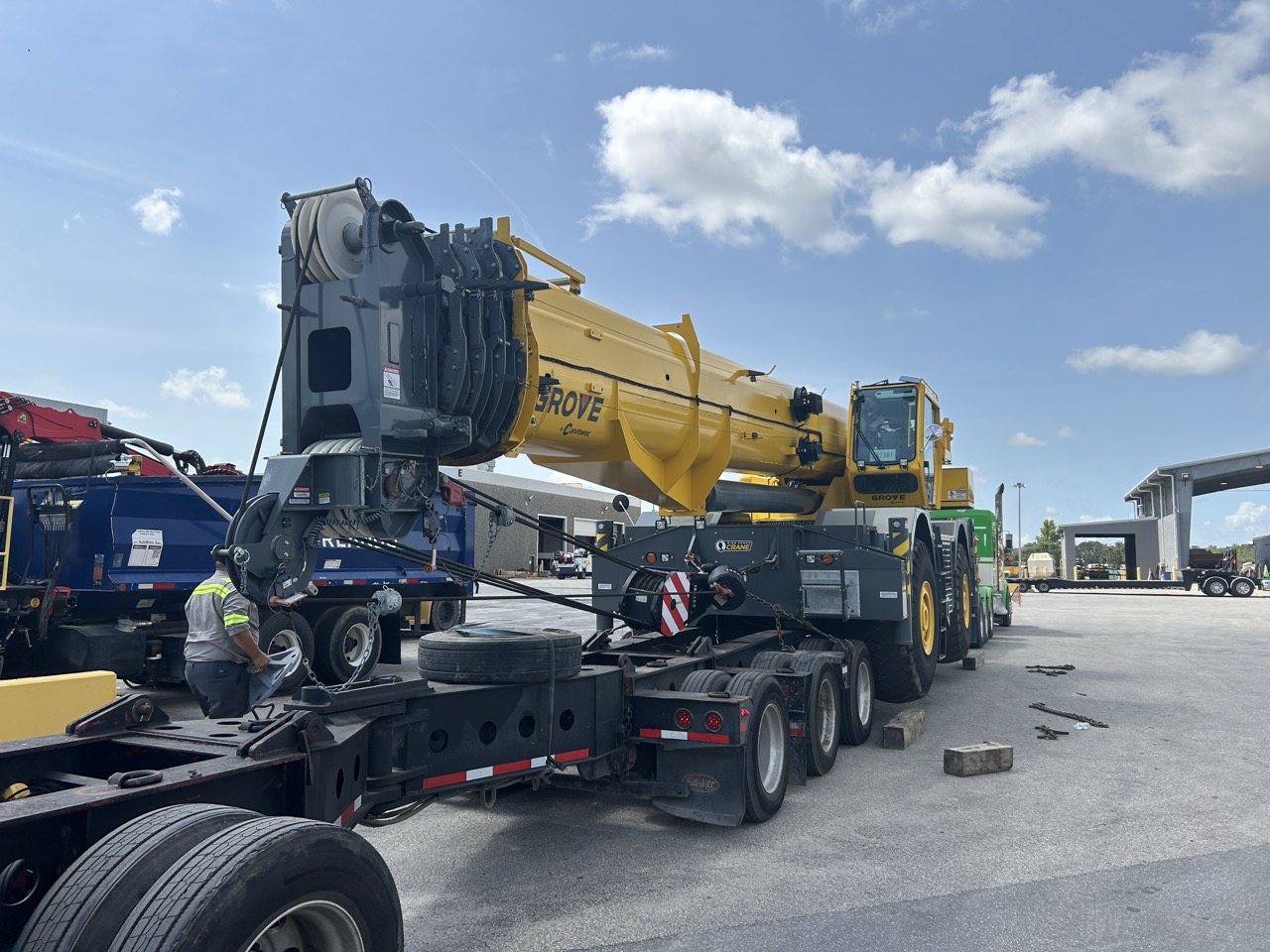
Once the excavator is positioned, it gets chained down at multiple points using properly rated chains and binders. This is not something to guess at or handle casually. It is standard practice on every load we haul, and it is one of the main reasons to use a professional hauler instead of moving equipment on a rented trailer.
The short version: low fuel, clean tracks, lowered boom, straight approach. Those four things make loading day faster and safer for everyone involved.
Documents and Site Access
Have keys and any equipment manuals on hand in case the driver needs them. If your job site has a tight or uneven staging area, mention it when you book. That detail can change which trailer works best for your machine.
- Fuel level checked and topped down if high
- Tracks cleared of loose mud and debris
- Boom and arm retracted and lowered
- Bucket tucked in flat, not extended
- Keys and manuals on hand for the driver
How Big Frog Handles Excavator Loading
Our drivers inspect every load before it moves and again at each stop along the route. We choose the right trailer for your machine's size and weight, whether that is a flatbed, a lowboy, or a Landoll. Not sure which one fits your excavator? Our guide breaks it down: Compare Flatbed vs Lowboy vs Landoll Trailer.
See the full picture of what we haul on our Construction Equipment Hauling page.
Ready to schedule your excavator for transport?
Get Your Free QuoteFrequently Asked Questions
Should I fill or empty the fuel tank before transport?
A low fuel level is usually best. It keeps the machine lighter and reduces the risk of a fuel leak during loading and transport.
Do I need to remove attachments before the truck arrives?
Not usually, but any loose attachments should be secured or removed if they are not permanently mounted. A loose bucket or hammer attachment is one of the most common things that shifts during a haul.
Who decides where the excavator sits on the trailer?
The driver does, based on the trailer type and the machine's weight distribution. That is part of what you are paying for when you book with a professional hauler instead of doing it yourself.
Does the excavator need to be washed before transport?
It is not required, but clearing loose mud and debris from the tracks helps the driver see the undercarriage clearly during the pre-load inspection.
What if my job site has no clear staging area for loading?
Let your hauler know ahead of time. A tight or uneven site can change which trailer works best and how much time the loading process takes.